Action
Adventure
Animation
Comedy
Crime
Documentary
Drama
Family
Fantasy
History
Horror
Music
Mystery
Romance
Science Fiction
Thriller
War
Western
Explore all movies appearances
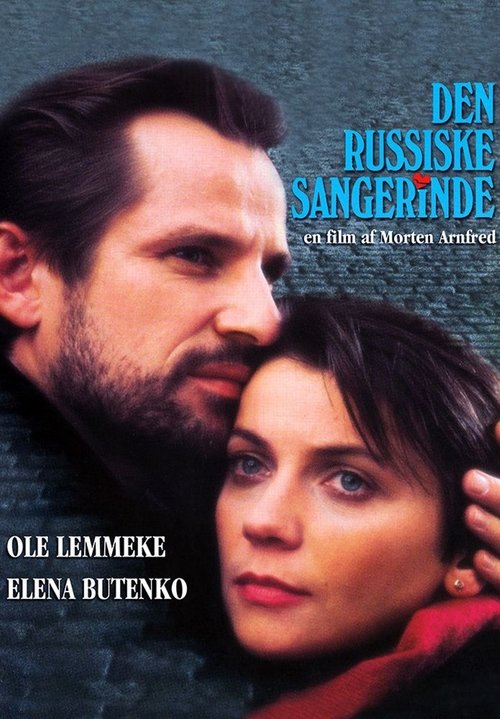
When a secretary at the Danish embassy in Russia dies in suspicious circumstances, the local police seem determined to close the case. But diplomat Jack Anderson, who has been brought in to observe, falls for a beautiful singer with ties to the murder and begins his own investigation.

Just after World War II, an American takes a railway job in Germany, but finds his position politically sensitive with various people trying to use him.

Jørgen Leth's personal, pleasurable distillation of Danish literature covers seven poets alive at the time of production and twenty classical poets. A handful of actors share readings of the classical texts in semi close ups against a dark background; the living poets read their own works.

Maria grows up in a seedy 1960s working class neighborhood, the daughter of an ambitious emigrant father and soon caught up in her own dangerously one track-minded pursuit of a violinist's career. A rich gallery of highly original characters contribute, for better and for worse, to Maria's coming of age. Based on Kirsten Thorup's critically acclaimed 1982 novel, filmed by Morten Arnfred.
The story takes place on a manor in the late 18th century, where the widow Ane Marie's son is suspected of burning down a barn. If the lord of the manor hands him over to the authorities, it will mean prison or military service for an indefinite period. Therefore, Ane Marie makes a deal with the lord of the manor: her son will go free if Ane Marie can do the work of three men and mow a field from sunrise to sunset.

Danish theater production from 1985. Per Olov Enquist wrote this chamber play about three cultural figures from Danish history. H.C. Andersen, who tries to gain favor with the cultural elite, the powerful theater director Johan Ludvig Heiberg, and his wife, the actress Johanne Louise Heiberg. Like the poet, Mrs. Heiberg also comes from a poor background and has stubbornly fought her way up the social ladder. The recording is from the Royal Theater's production.
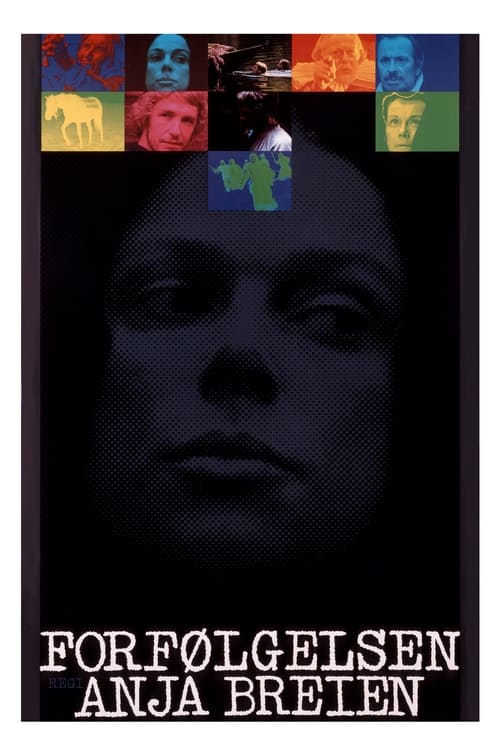
Having gone through many personal struggles, Eli returns to her native village and begins to work on the farm of Ingeborg Eriksdotter, eventually tending a plot that once belonged to her family. But Eli has been gone a long time, and the opaque villagers see her as an outsider—she is suspicious from the start. The year is 1625, and stories of witches conjuring up evil are a part of the daily culture. Eli unwittingly makes matters worse for herself when she is able to cure the sick with herbs, and when she begins an affair with Aslak a farmhand—clearly she must have cast a spell on him. This all adds up to a witch hunt with a ready-made "witch." Eli, in the end, is officially accused of witchcraft by a devious bailiff, while Ingeborg makes every attempt to save her, and Aslak himself does not survive the stress—hardly a good omen for the outcome of the trial.
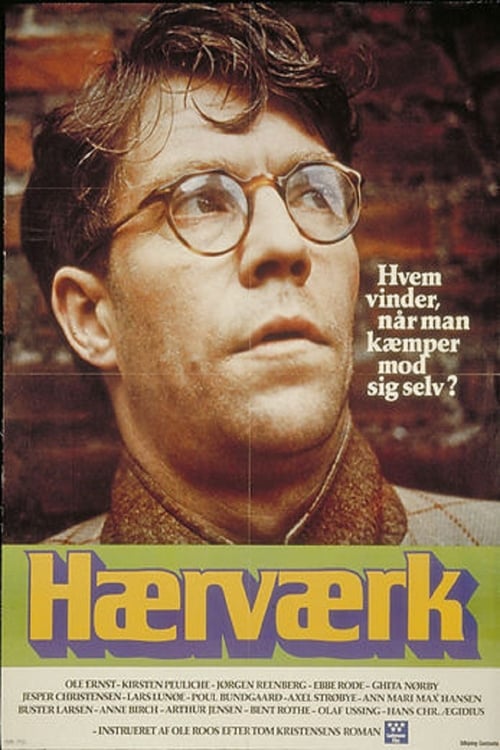
Based upon the novel "Hærværk" by Tom Kristensen about the self destructive person. The literary reviewer Ole Jastrau chooses to free himself from his well-ordered middle class life. He allow the seriously left-wing writer Steffensen move in with himself which soon causes disintegration of his home an marriage.
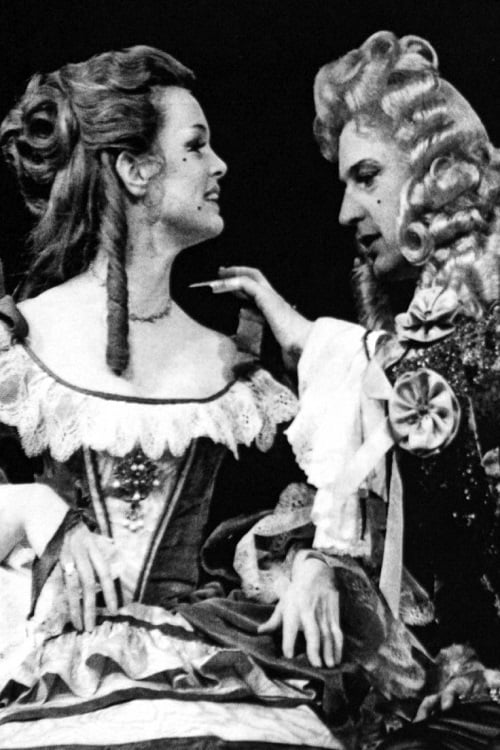
Bergman took one of his favourite plays to Copenhagen for a guest performance, which was even broadcast on Danish TV. In his Copenhagen The Misanthrope, Bergman maintained a dual approach. On the one hand, a production of Molière's play as a theatrical game performed in style and intellectually conceived; on the other hand, an exposure, through physical and psychological intensity, of the emotional tragedy in which Alceste and Celemine are both victims. Expectations were high prior to Bergman's production of The Misanthrope. A reviewer wrote, 'For the first time Molière's connection to the Danish stage is intercepted by a director whose forte is physiological tragedy, Strindberg over Holberg'. Many reviews had expected Bergman to put his very personal stamp on the production. Instead they experienced 'a clean Molière' and were struck by Bergman's faithfulness to the original mise-en-scene and to the classical rhythm of Molière's text.

Audun’s son is killed in an accident while the mother is in bed with her lover. Ten years later is Audun on the road living as a salesman and on the lone women that he meet and steal money from.
Subscribe for exclusive insights on movies, TV shows, and games! Get top picks, fascinating facts, in-depth analysis, and more delivered straight to your inbox.