
Action
Adventure
Animation
Comedy
Crime
Documentary
Drama
Family
Fantasy
History
Horror
Music
Mystery
Romance
Science Fiction
Thriller
War
Western
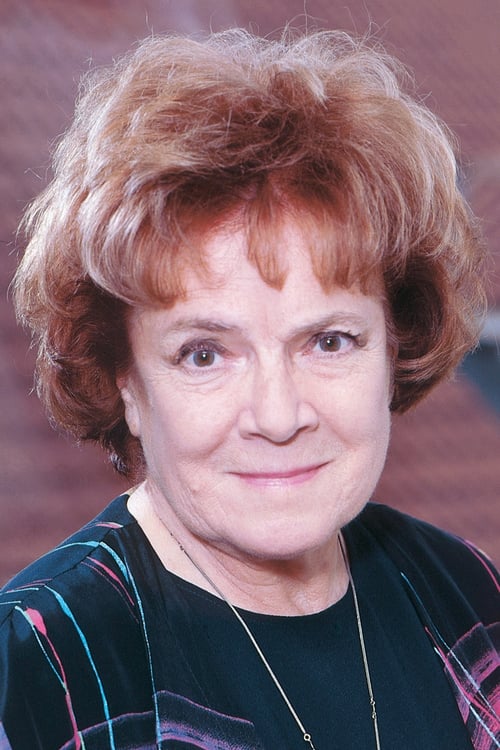
Vlasta Chramostová (17 November 1926 – 6 October 2019) was a Czech film actress. She appeared in 35 films since 1950. She starred in the 1950 film The Trap which was entered into the 1951 Cannes Film Festival. A signatory of Charter 77, she was active in the Velvet Revolution, where the Czechoslovak Socialist Republic was overthrown in November 1989. At a rally at the Vinohrady Theatre in Prague,...
Explore all movies appearances

No plot available for this movie.
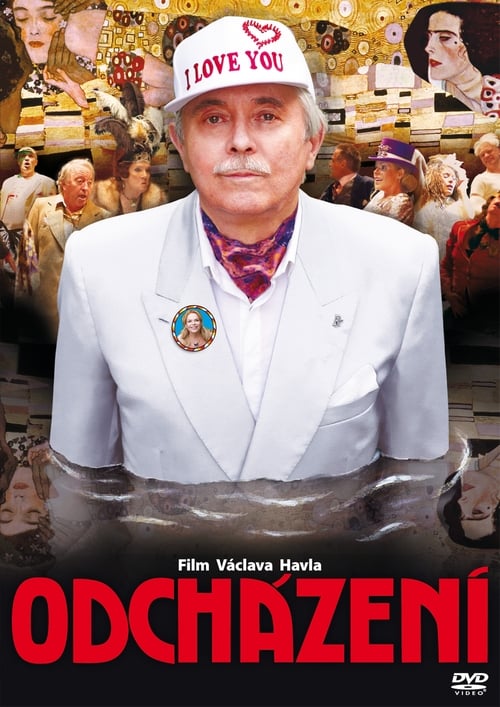
A bitter sweet comedy that follows a highly appointed Chancellor who set to step down from his position after years of service to his country. With just two last days left to enjoy his palatial villa before he is finally evicted, his situation gradually goes from bad to worse.
No plot available for this movie.
The story of a teacher, a famous actress, and her students set against the backdrop of the harsh normalization period, a time when, after the Soviet occupation, most people tried to survive in the gray zone, and only a handful of brave souls were willing to risk their positions in the fight against the regime.
Solitude – on the farm. Loneliness – in their hearts. People are determined by the place where they live. Even if it is a cursed place in a way, people grow attached to it and eventually lose the ability to leave. Even if they long to do so, like Marie. This powerful story of a cooling marriage, determined by the adverse forces of fate and focused on three main characters, touches on such life values as love, infidelity, suffering, and illusion. It tells us that a person must first find peace within themselves in order to have the strength to cope with their surroundings. The screenwriter Jiří Bednář was inspired by Robinson Jeffers' poem Turzovo kotviště (Turzo's Anchorage).
The story takes place at the beginning of the 20th century. Little Lojzík, whose mother was killed by lightning, lives on a farm with his father and an old farmhand. The harsh world has taught him to perceive images that remind him of his lost mother's embrace. He searches in vain among people for someone to whom he can once again become emotionally attached. He finds no support or security in his father, his mother's sister, or his stepmother Róza, even though she was the only one who showed compassion for the boy at the beginning of their life together. The only one who truly shares Lojzík's fate as an abandoned child is an ordinary chicken...

ComiBaran, a protestant blacksmith arrives in the little village of Lakotice to kill Sekal, a cruel Nazi collaborator.
Two different productions of Václav Havel's Beggar's Opera reveal the political dynamics of Czechoslovakia before and after the velvet revolution.
Quite a few years have passed since November 1989. Czechoslovakia has been divided up and, in the Czech Republic, Václav Klaus’s right-wing government is in power. Karel Vachek follows on from his film New Hyperion, thus continuing his series of comprehensive film documentaries in which he maps out Czech society and its real and imagined elites in his own unique way.
From the behavior, discourse, and appearance of individual actors, Vachek composes, in the form of a mosaic, a broad and many-layered film-argument about Czechoslovak democracy in the period of its rebirth, all administered with the director’s inimitable point of view.
Subscribe for exclusive insights on movies, TV shows, and games! Get top picks, fascinating facts, in-depth analysis, and more delivered straight to your inbox.