
Action
Adventure
Animation
Comedy
Crime
Documentary
Drama
Family
Fantasy
History
Horror
Music
Mystery
Romance
Science Fiction
Thriller
War
Western
Explore all movies appearances
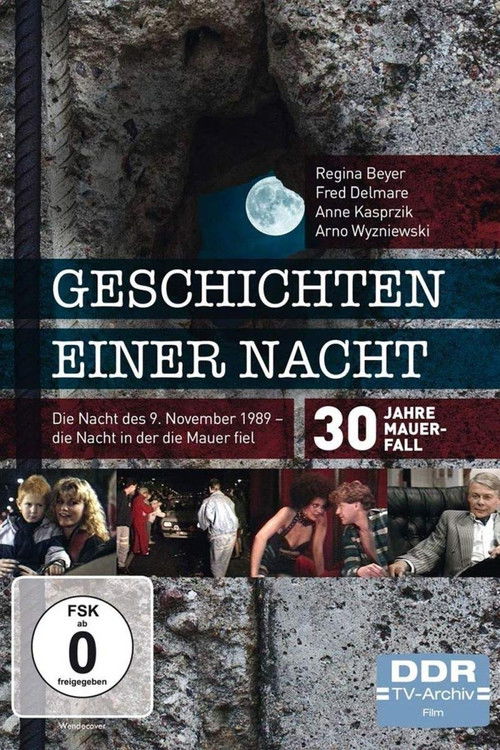
Six episodes taking place the night the Berlin Wall came down.
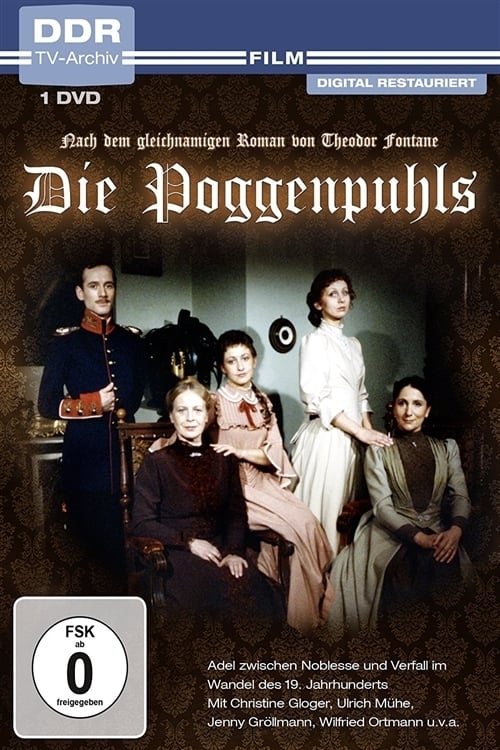
The long-established aristocratic von Poggenpuhl family has seen better days. Towards the end of the 19th century, the major's widow and her children have long since eked out a poor existence characterized by a lack of money. Only the dusty ancestral gallery is a reminder of past fame and fortune. But while the mother has resigned herself to her new situation, her sons and daughters hope in vain for a change of fortune.

The time is World War II, and Juergen Siebusch and his mother are retreating along with the German army, just ahead of the invading Russian forces. Both mother and son hole up in the town of Hohengoerse, where Juergen finds some work watching over sheep - and learns a bit about the facts of sheep life that he extrapolates to some advantage when he meets the appealing Amelie, daughter of the landowner. He first helps Amelie out and later applies his new-found knowledge in a barn, appropriately enough. As the Red Army draws near, Juergen deserts a hastily put-together "people's force," as he prefers the barn to the gun. Russian soldiers are shown sleeping and snoring next to their tanks, and the local fascist executed - the war is over. When the new Communist government sets up a land reform package, Amelie's mother's land gets divided up into small plots for small farmers.

In spring 1946, Warsaw historian Wojtek arrives in a Polish provincial town to study the Renaissance. He soon becomes entangled in the fierce postwar power struggle between the Soviet-backed People’s Government—nationalizing industry and land—and reactionary exiled forces waging “bandit terror,” from train robberies to political assassinations. As violence escalates, Wojtek shifts from observer to active defender of the new “people’s power.”
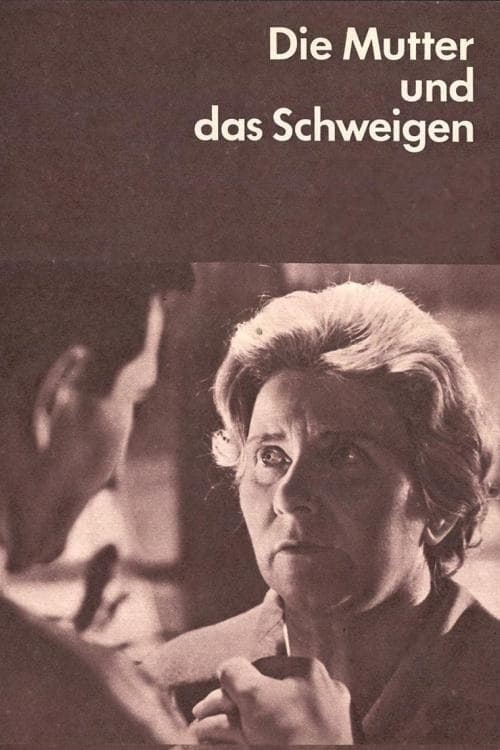
Based on a true story from 1936: Klara Baumann, a working-class woman, communist and mother, flees her German homeland for neighboring Czechoslovakia. When a party courier is arrested in Berlin, Klara agrees to return to Germany with illegal material. On behalf of the central courier service, she returned to Germany illegally many times, risking her life, in constant fear of being caught. When the illegal party cell in a large Berlin factory is arrested, Klara distributes the latest issue of the Red Signal on her own. She wants to prove to the Gestapo that she has imprisoned the wrong people. Authentic story of a communist and mother who flees her German homeland for neighboring Czechoslovakia in 1936.
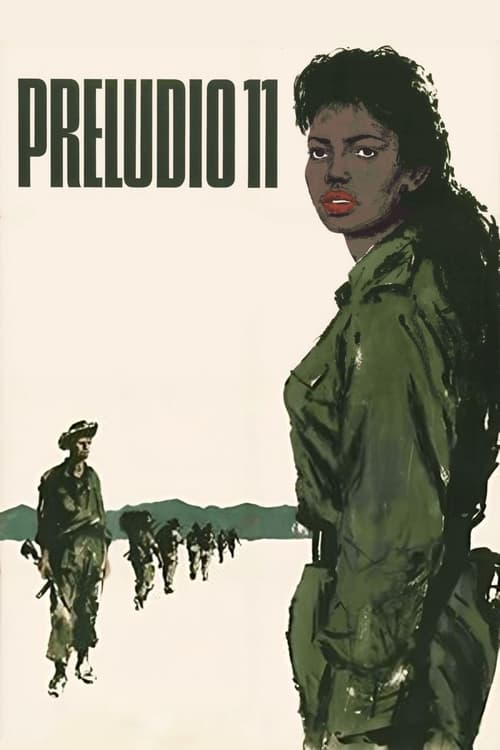
Daniela – a single mother, whose boyfriend left for the US – believes wholeheartedly in Cuba's revolutionary new order. Meanwhile, in Florida, a plot is afoot. Under the command of an American officer, four Cubans ex-patriots and a Guatemalan land on the Cuban coast to prepare a US invasion of the island. Daniela's superior, the corrupt Cuban officer Palomino, is secretly helping the invaders and the young woman becomes entangled in the intrigue.
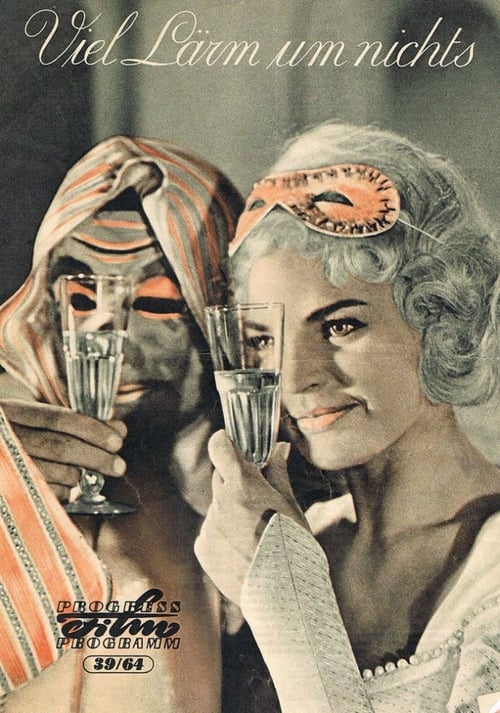
Young lovers Hero and Claudio, soon to wed, conspire to get verbal sparring partners and confirmed singles Benedick and Beatrice to wed as well.
1945: Buchenwald concentration camp shortly before liberation: Polish inmate Janowski rescues a small child hidden in a suitcase. A child in the world of death means hope and danger at the same time. When his fellow inmates and members of the secret resistance group discover the boy, they are faced with a difficult decision. But in the end, humanity prevails. The original and first German feature film about life and death in a concentration camp based on an authentic story.
In spring 1957 Budapest, former lovers Sándor and Mónika reunite after 16 years at a street‐corner café. Their conversation flashes back to 1941, when Hungary joined WWII under Horthy and eight fresh teacher‐graduates, including Sándor and Mónika, vowed lifelong solidarity. War and shifting politics fracture their bond and force each to choose a path through turbulent decades. The drama echoes the 1956 uprising: participants seeking reform are branded “counter‐revolutionaries,” denounced by steadfast communists like László, who scorns defectors such as Béla for “dishonouring socialism and the people.”
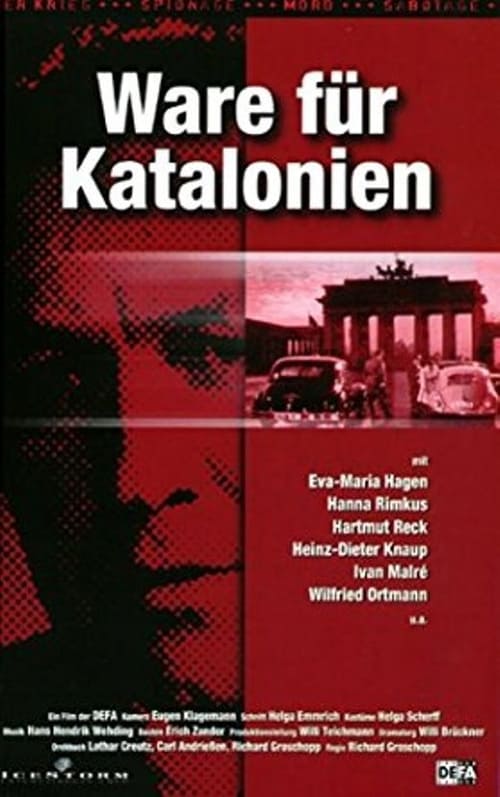
At the end of the 1950s, the production of optics in the German Democratic Republic has reached top quality and instigates interest in the West. When national demand rises strongly and at the same time the export to South America heavily decreases, the Volkspolizei - the GDR police force - starts to look into the case. Two seemingly unrelated cases are the starting point for the investigation by second lieutenant Schellenberg of the department for optics racketeering: An old woman who was arrested in the Berlin city railway for trying to smuggle a pair of binoculars to West Berlin, and a dead person in an area of allotments who was involved in obscure dealings with optical devices.
Subscribe for exclusive insights on movies, TV shows, and games! Get top picks, fascinating facts, in-depth analysis, and more delivered straight to your inbox.