Action
Adventure
Animation
Comedy
Crime
Documentary
Drama
Family
Fantasy
History
Horror
Music
Mystery
Romance
Science Fiction
Thriller
War
Western
Explore all movies appearances
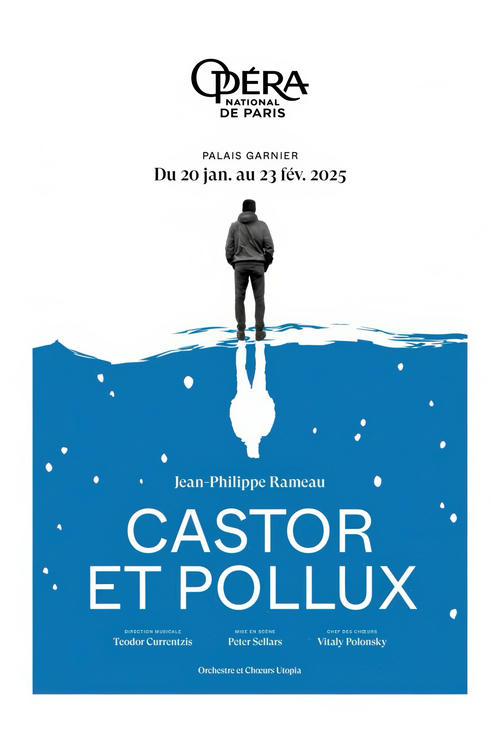
A return to its roots for Castor et Pollux, Jean-Philippe Rameau’s lyric tragedy first performed in 1737 at the Académie royale and inspired by the mythological episode of the Gemini. Rarely performed in its original version – the score was reworked by Rameau himself in 1754 –, this daring work plays on contrasts and expressiveness, as in the famous “Tristes apprêts”. The aria is sung by Télaïre mourning the death of her fiancé Castor, killed in battle, before his twin brother Pollux descends into the Underworld to ask his father, Jupiter, to bring him back to life. While this opera celebrates brotherly love, its prologue poses an essential question for director Peter Sellars: how do you stop a war and its attendant hatred and resentment?
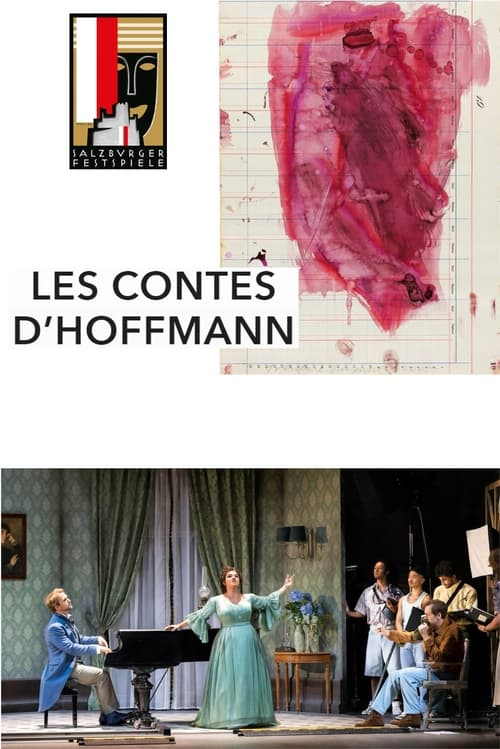
Production of the Salzuberger Festspiele 2024. French director Mariame Clément will explore the relationship between art and real life by linking the three “tales” with individual stages of Hoffmann's biography as an artist in her production. This has decisive consequences for the female characters, or rather for the view of the images that Hoffmann projects onto Stella: the angelic but emotionally cold Olympia, who turns out to be a doll;
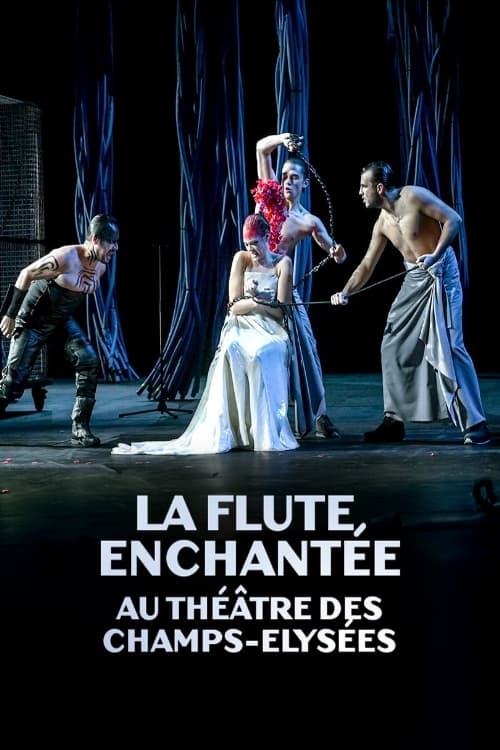
No plot available for this movie.
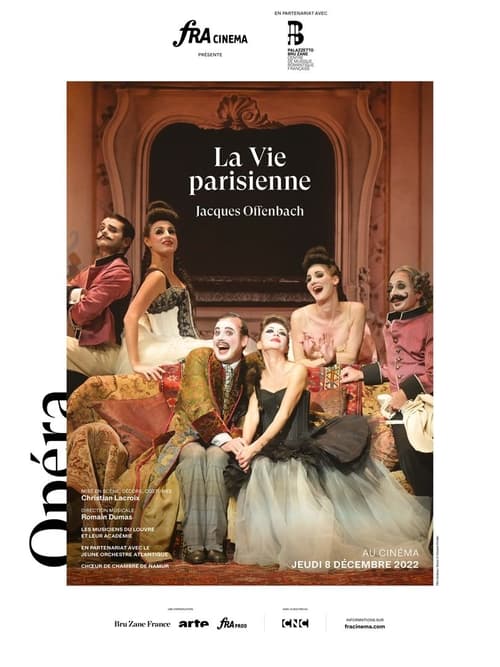
La Vie parisienne (Parisian life) is an opéra bouffe, or operetta, composed by Jacques Offenbach in 1866, with a libretto by Henri Meilhac and Ludovic Halévy. This work was Offenbach's first full-length piece to portray contemporary Parisian life, unlike his earlier period pieces and mythological subjects. It became one of Offenbach's most popular operettas.

No plot available for this movie.
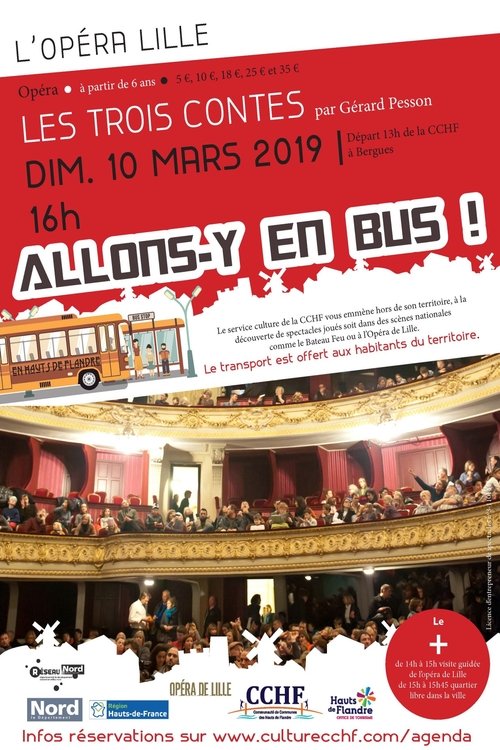
Lost among strangers, a sensitive princess, a famous writer and an unwelcome devil try to find their place in an unfamiliar world. With his accessible and willingly facetious music, French composer Gérard Pesson has created an operatic adventure through three fairy tales. Their marvels are treated with fantasy and delicacy by librettist and director David Lescot.

Pro-shots performance of Claude Debussy's opera "Pelléas et Mélisande" by Malmö Opera
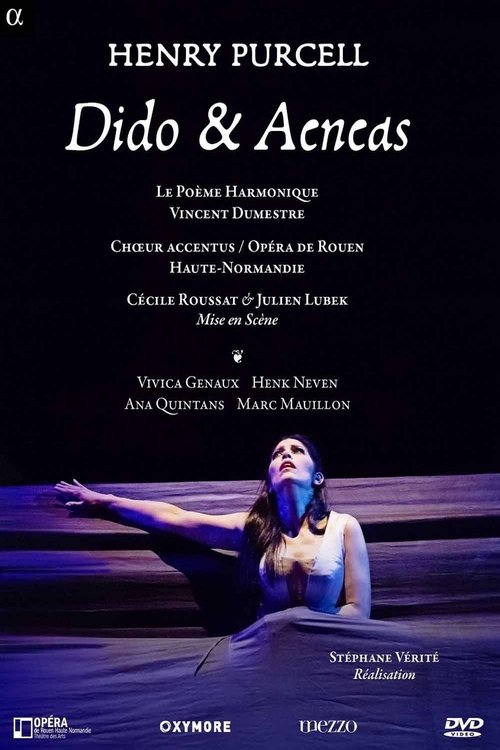
After the success of the DVDs devoted to Le Bourgeois Gentilhomme and Cadmus & Hermione, Vincent Dumestre and Le Poème Harmonique continue their exploration of repertoires of the 17th century.This piece, combining theatre and music, allowed Purcell to achieve his dramatic ideal. In fact, he wrote only a single opera in his short career he died at the age of 36 , but with it, he left us a gem of rare beauty and extreme concision. The work's genius is also due in part to the quality of the libretto, skilfully put together by Nahum Tate.Cécile Roussat and Julien Lubek, stage directors coming from the arts of the circus and the mime Marceau, had already collaborated with Le Poème Harmonique on the Carnaval Baroque. Here, they combine mime, dance and acrobatics with the music in a moving, magical production.

Emmanuelle Haïm has established herself as one of the world’s leading performers, conductors and interpreters of Baroque repertoire, not only with Le Concert d’Astrée, the ensemble she founded in 2000, but with several of the world’s greatest orchestras. Known for her fresh and expressive approach to Baroque music, she has garnered critical acclaim and several international awards with her own ensemble, including Victoires de la Musique Classique, ECHOs, Gramophone Awards, and Grammy nominations.
Les Contes d’Hoffmann opera intertwines reality and fantasy, exploring the relationship between art and real life in Mariame Clément’s staging, with Marc Minkowski bringing the score to life.
Subscribe for exclusive insights on movies, TV shows, and games! Get top picks, fascinating facts, in-depth analysis, and more delivered straight to your inbox.