
Action
Adventure
Animation
Comedy
Crime
Documentary
Drama
Family
Fantasy
History
Horror
Music
Mystery
Romance
Science Fiction
Thriller
War
Western

Margit Carstensen (29 February 1940 – 1 June 2023) was a German theatre and film actress, best known outside Germany for roles in the works of film director Rainer Werner Fassbinder. Carstensen was born and raised in the northern German city of Kiel. Upon graduation from the local high school in 1958, she studied acting at the Hochschule für Musik und Theater Hamburg. This education led to her fi...
Explore all movies appearances

Using unpublished and newly digitalised archive footage and film material, Bettina Böhler has brilliantly assembled this film about the life and work of the exceptional artist Christoph Schlingensief, who died in 2010.

Rainer Werner Fassbinder was probably Germany’s most significant post-war director. His swift and dramatic demise at the early age of 37 in 1982 left behind a vacuum in European filmmaking that has yet to be filled, as well as a body of unique, multi-layered, and multifarious work of astonishing consistency and rigour. From 1969 onwards, Danish director and film historian Christian Braad Thomsen maintained a close yet respectfully distanced friendship with Fassbinder. The film is based on his personal memories as well as a series of conversations and interviews he held with Fassbinder and his mother, Lilo, in the 1970s.

A film portrait of the influential Bavarian actor, director, and screenwriter who publicly confessed his homosexuality, which chronologically covers all the important stages from Action-Theater to the director's early death, supplemented with anecdotes.
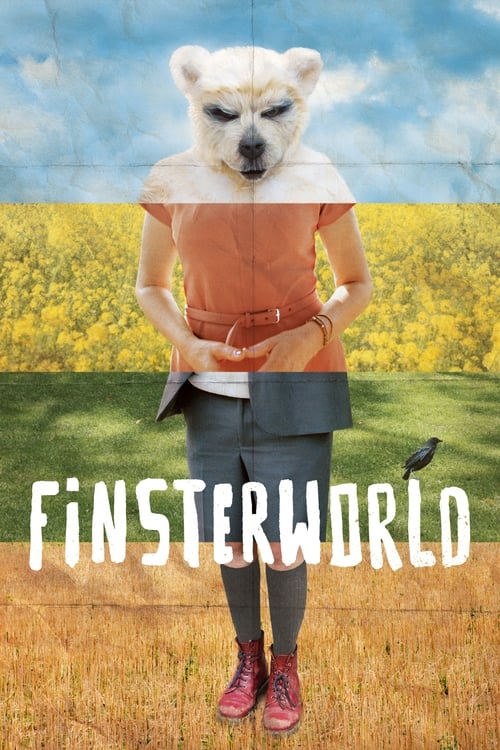
The film tells different stories in a kind of parallel Germany about love, affection and hatred.

The movie version of Christoph Schlingensief's stageplay.

In Mea Culpa, Christoph Schlingensief blurs a delicate line: he ignores the threshold that separates the healthy from the sick. By making his cancer the subject of an opera, premiering on the largest German-speaking theater, he is putting the art district under pressure: a wonderful institution like the Burgtheater must use its artistic resources lavishly to reveal the entire "truth" about us humans. At the end of the day, when the scenery on Janina Audick's revolving stage has finally come to rest, when Isolde's last Liebestad has been sung enchantingly beautifully by Elfriede Rezabek and indescribable jubilation breaks out, then Schlingensief is completely alone with his illness.

A documentary about the life of Karlheinz Böhm from his film career to his charity activities in Ethiopia.

Paul, a man suffering from cerebral palsy, lives an unfulfilled life in a nursing home. Sitting in his wheelchair, he fantasizes about a life in which people understand him, women find him irresistible, and he is be a force to be reckoned with. He places this imagined self in four different sexual fantasies, each with a different woman.
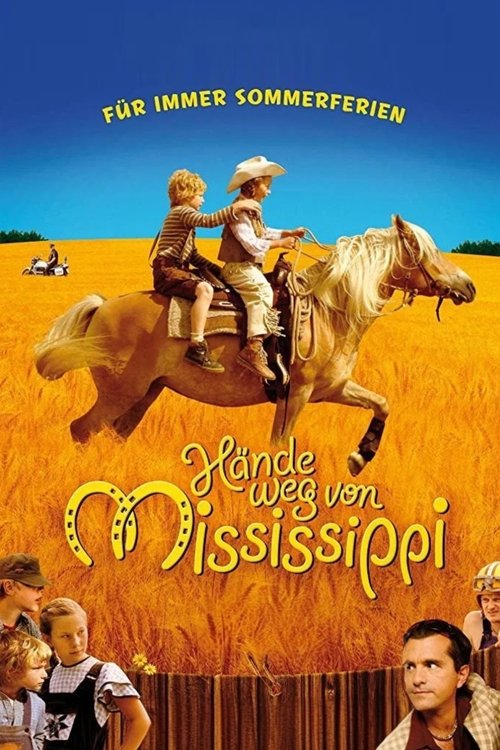
Full of anticipation, ten-year-old Emma goes on vacation to her grandma Dolly in the country. Once there, however, the girl learns that old Klipperbusch has died - and his money-hungry nephew Albert is already in the process of converting the inherited estate for profit. And anything he can't use for this is thrown out without further ado. At least Emma manages to save Klipperbusch's beloved mare Mississippi from the slaughterhouse at the last minute: she persuades her grandmother to buy the horse from Albert. Emma is now a proud horse owner. She is all the more surprised when Albert turns up at her door one day and desperately wants Mississippi back. It's clear to Emma and her friends that this guy can't be up to no good...

Focuses on three very different siblings, all searching for happiness. Hans-Jörg is a sex addicted librarian, who is interested in young students. Werner is a successful politician with a dysfunctional family. Agnes, a trans woman, works as a table dancer in a night club. The three brothers just have one thing in common: their longing for a happy life.
Subscribe for exclusive insights on movies, TV shows, and games! Get top picks, fascinating facts, in-depth analysis, and more delivered straight to your inbox.