
Action
Adventure
Animation
Comedy
Crime
Documentary
Drama
Family
Fantasy
History
Horror
Music
Mystery
Romance
Science Fiction
Thriller
War
Western
Explore all movies appearances

With the opera "Le nozze di Figaro" commenced the remarkably successful cooperation between Mozart and his librettist Lorenzo da Ponte. The first night of "Figaro", presumably Mozart's most perfect musical comedy, was held in Vienna on May 1st, 1786. It is based on Beumarchais' "scandalous" comedy "La Folle Journée ou Le Mariage de Figaro" which, after its first staging in the pre-revolutionary Paris of 1784, soon became a huge success throughout Europe. For the opera, the revolutionary content of the intricate comedy of love and conspiracy against the background of noble capriciousness was actually toned down but not completely abandoned. The extensive ensemble scenes, the treatment of the orchestra and the delicately nuanced musical profiles of the characters hit the target and, looking back, proved to be pioneering for following generations of musicians.
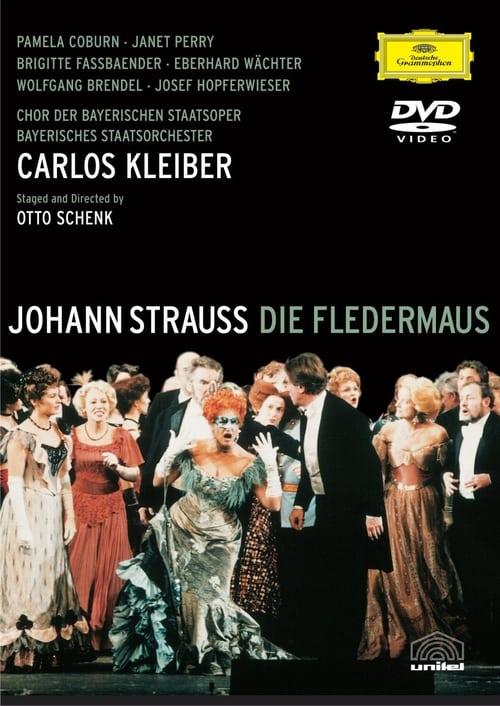
Performances from Pamela Coburn, Brigitte Fassbaender, Janet Perry, Eberhard Wachter, the Choir und Ballet der Bayerischen Staatsoper, and the Bayerisches Staatsorchester. Rosalinde, wife of Eisenstein, is having an affair with Alfred. Eisenstein is due to begin a prison sentence the next morning, and the prison governor, Frank, is expected to collect him at any moment. However, Eisenstein allows himself to be talked into attending a fancy dress ball by Dr Falke, and when Frank arrives to find Alfred with Rosalinde, he assumes him to be Eisenstein and carts him off to prison.
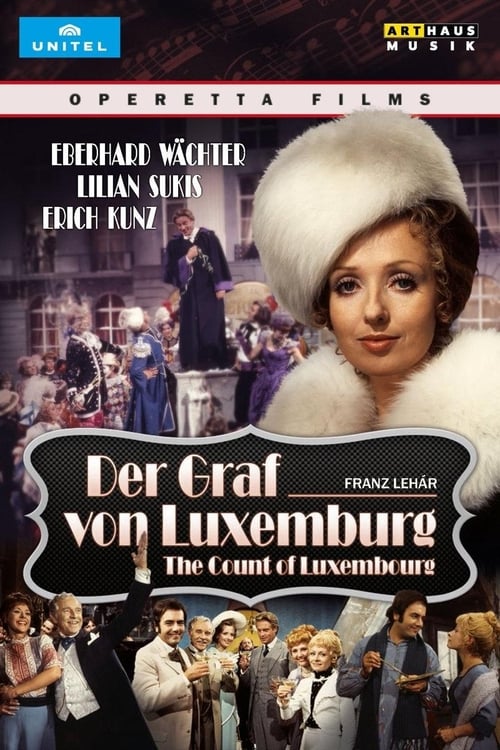
Der Graf von Luxemburg (The Count of Luxembourg) is an operetta in three acts by Franz Lehár to a German libretto by Alfred Willner, Robert Bodanzky, and Leo Stein. A Viennese take on bohemian life in Paris at the beginning of the 20th century, the story revolves around an impoverished aristocrat and a glamorous opera singer who have entered into a sham marriage without ever seeing each other and later fall in love at first sight, unaware that they are already husband and wife.
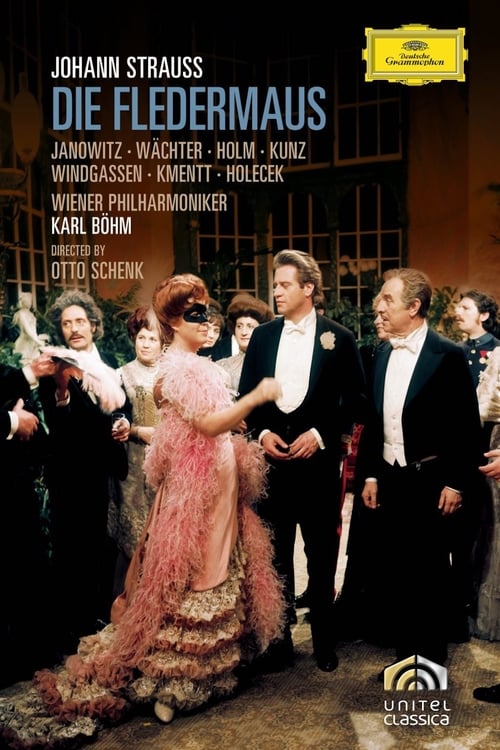
Witty, fun, intoxicating film of Johann Strauss II's popular operetta, based on a stage production from Vienna State Opera; this is a showcase for the entire cast, but most especially Eberhard Wächter as the insufferably boorish Gabriel Eisenstein, and Gundula Janowitz as his long-suffering wife. Open the champagne, have yourself some torte, and enjoy this delectable comedy from Vienna.
The operetta is one of the greatest stage works by Johann Strauss. It combines the lively waltz melodies of the golden Viennese operetta era with the fiery Csárdás sounds of Hungarian folk music. In 1954, Arthur Rabenalt filmed the operetta with Paul Hörbiger and Margit Saad in the main roles: A small village in the Puszt. A young refugee son advertises the hand of his daughter at his neighbour, a pig breeder, and even fulfils the demand for a noble title, as the gypsies living on his property have raised him to a gypsy baron. But then he falls in love with a young gypsy.

Vienna, 1826. The penniless composer Franz Schubert lives with friends in the house of court glazier Tschöll and his wife. Because of their three beautiful daughters, Hederl, Haiderl, and Hannerl, the property is called the "Three Girls' House." Hederl and Haiderl celebrate a double wedding with the gentlemen, master saddler Bruneder and postmaster Binder. Due to an intrigue by soprano Lucia Grisi, Hannerl, with whom Schubert is in love but dares not reveal herself, turns away from him and marries singer Franz von Schober. Schubert is left with nothing but music.
Subscribe for exclusive insights on movies, TV shows, and games! Get top picks, fascinating facts, in-depth analysis, and more delivered straight to your inbox.