
Action
Adventure
Animation
Comedy
Crime
Documentary
Drama
Family
Fantasy
History
Horror
Music
Mystery
Romance
Science Fiction
Thriller
War
Western
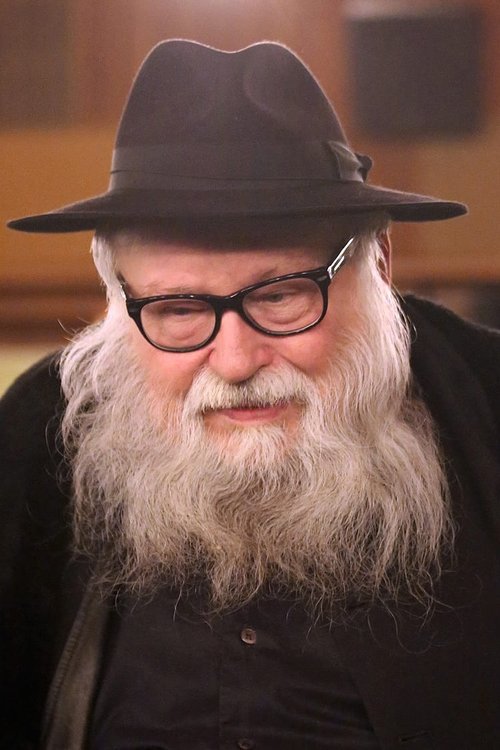
Hermann Nitsch was an Austrian avant-garde artist, known for his controversial performances and paintings. He was a founding member of the Viennese Actionism movement, which sought to challenge traditional art forms through provocative actions. Nitsch's Orgies Mysteries Theatre involved ritualistic performances that often included the use of animal blood and carcasses, aiming to evoke a primal res...
Explore all movies appearances
A short film by Maria Lassnig, shot in 1970.
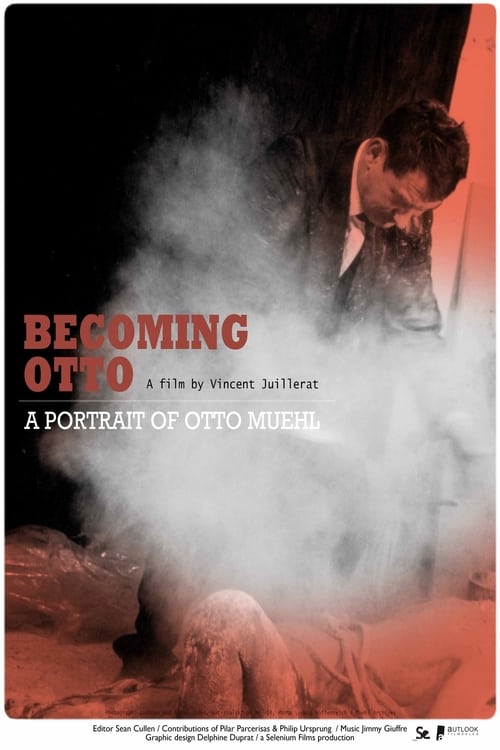
A portrait of the Austrian avant-garde artist Otto Mühl/Muehl (1925-2013), whose work combined sex, violence, gastronomy and bodily effluence with unbridled abandon.

No plot available for this movie.

Documentary satire about a project by Christoph Schlingensief: Ten years after his TV project "Talk 2000", Schlingensief started to work on a new talk show – at least that was what he claimed. But in reality, it was obvious that the pilot episodes he produced would never be broadcasted. Nevertheless, all celebrities from the political and cultural sphere, Schlingensief had requested, accepted his invitation, including the filmmaker Oskar Roehler, the televangelist Jürgen Fliege, the politician Claudia Roth, or the rapper Sido. It is beyond question, that the talk show panel took an unconventional course directly from the start – and was soon threatening to turn into an uproar.

This exhibition focuses on Jonas Mekas’ 365 Day Project, a succession of films and videos in calendar form. Every day as of January 1st, 2007 and for an entire year, as indicated in the title, a large public (the artist's friends, as well as unknowns) were invited to view a diary of short films of various lengths (from one to twenty minutes) on the Internet. A movie was posted each day, adding to the previously posted pieces, resulting altogether in nearly thirty-eight hours of moving images.
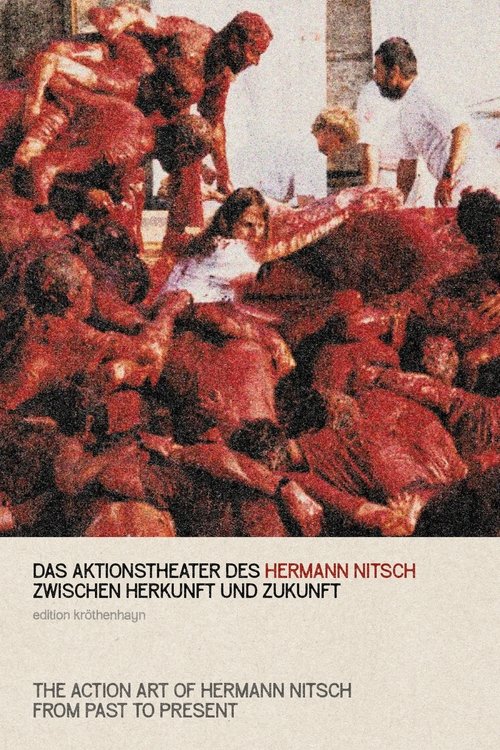
A retrospective on Hermann Nitsch, Actionist and painter, composer and stage designer. He is one of the most renowned Austrian artists of today and nevertheless still divides the art world as before. Nitsch belongs beside Günter Brus, Otto Mühl and Rudolf Schwawrzkogler to the most important main actors of Vienese Actionism. At the beginning of the sixties he carried out his first 'Actions' in Vienna, which involved several trials and three terms of imprisonment. His main work, the "Orgy Mystery Theatre", inspired by Greek mythology, as well as by Antonin Artaud or Sigmund Freud, has been introducing, building up and carrying on all art forms since this time. The documentary includes a 4-hour overview of his Actions from 1962-2003, as well as an interview from 2005.
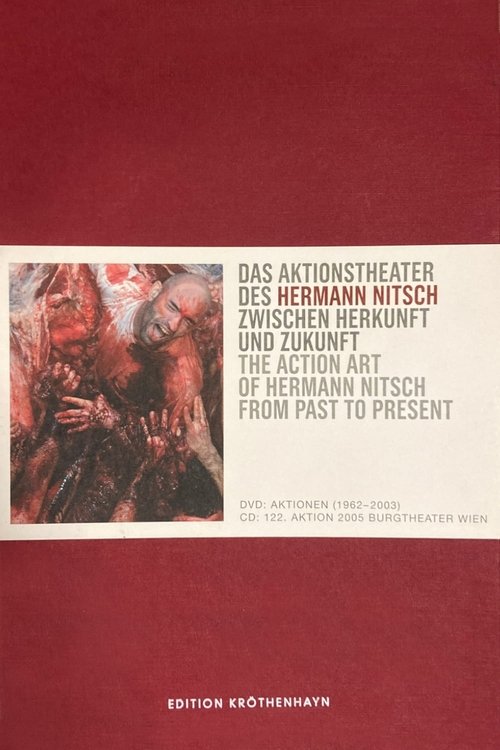
Actions 1962–2003 (1 DVD-PAL) plus a CD containing recordings from the Burgtheater performance 2005. Hand-numbered first edition of 1000 copies. The packaging consists of a slip lid box with banderole, containing an 80 page book with photos and texts. On the DVD there is a 4-hour overview of all "Actions" of 1962–2003, as well as an interview from 2005. The 80-page book (German/English) with a text by Florian Schreiner and numerous photos explains the theoretical basis of Nitsch’s work. The CD contains recordings of the 122nd "Action" from the castle theatre Vienna (Burgtheater).
A casual, personal portrait of Hermann Nitsch, made with footage I took over the many years of our friendship. Footage includes early performances in New York, images of Hermann shortly after the acquisition of the Prinzendorf monastery, which since has become his main space of activity. You also see Hermann with his Vienna, New York, and Napoli friends, Peter Kubelka, Raimund Abraham, Gunther Brus, George Maciunas, Giuseppe Morra, and others.
Based on slides shot in 1978 of the Austrian aktion artist Hermann Nitsch. Put away for 24 years, the color transparencies are spread out on a light table. The images are examined with a macro lens and captured with digital video. Not so much a reconstruction, or documentary of an event but a process of re-imagining. A hundred frames record a 12-hour, noon to midnight performance in an Roman amphitheatre in the center of Trieste in Northern Italy. Hermann Nitsch has been creating his unique rituals since the early 1970’s. The blood flows over naked bodies strapped on crosses, carried blindfolded, senses are tweaked with percussion sounds and blaring brass instruments. Religious iconography, operatic orchestrations of cast, crew, friends, and the public who eat, dance, drink.
"Frauenmuskel is a jarring and sexually explicit film. Yet, the film holds an important dual sense of mystery that haunts long and after the film is over. Filmed during the Hermann Nitsch action of 1998, the film covers a stroll through the countryside as well as nightly impressions of the stars and clouds above Hermann Nitsch, himself" -Christopher May
Subscribe for exclusive insights on movies, TV shows, and games! Get top picks, fascinating facts, in-depth analysis, and more delivered straight to your inbox.