
Action
Adventure
Animation
Comedy
Crime
Documentary
Drama
Family
Fantasy
History
Horror
Music
Mystery
Romance
Science Fiction
Thriller
War
Western
Explore all movies appearances

No plot available for this movie.

No plot available for this movie.

No plot available for this movie.

Why is a person evil? Is evil in the genes? These questions have always preoccupied people. The approaches to explaining evil are as varied as evil itself. The latest science assumes that there are three factors that shape human behavior: genes, the environment and the individual situation. All three factors interact and influence each other. The film presents the latest research and addresses one of the most exciting questions in behavioral research.

What lies hidden beneath Moscow? Subway palaces full of Soviet propaganda, Stalin's magnificent bunkers, centuries-old river systems. For decades, there have been repeated clues, cryptic statements and hints about Moscow's underground. The cinematic search for clues shows Stalin's command bunker and the government object GO-42, a headquarters of the Soviet military during the Cuban Missile Crisis in 1962. A residential house with potted plants and curtains was built over GO-42 as camouflage. Until the end of the Cold War, specially trained soldiers took care of the bourgeois residential charm and turned on the lights in the evening while 2,000 people threatened the world around the clock with intercontinental missiles. The documentary also shows encounters with the illegal explorers of these complex transportation and housing systems, the Diggers.

If, at first, human being used stars to find its bearings, mankind can nowadays count on science to measure the Earth at a millimetric scale. Because land surveying of our planet is still in full swing. Satellites, cameras or drones : technology progress allows the scientists to explore it all. They can measure oceans, volcanoes, or even the atmosphere. But scientists are walking a tightrope, torned between their desire to gather more and more informations, and a population concerned about personal data's protection. This documentary shows a glimpse of actual scientifical research, and interrogate numerous scientists about the interest of land surveying in their specific field of research.

The first ascent of the Matterhorn was made on July 14, 1865 by Edward Whymper, Francis Douglas, Charles Hudson, Douglas Hadow, Michel Croz and two guides from Zermatt, Peter Taugwalder father and son. Douglas, Hudson, Hadow and Croz are killed on the descent after Hadow slips and drags the other three men down the north face. Whymper and the two Taugwalders, who survive, are later accused of having cut the rope that connected them to the rest of the group so as not to be dragged into the fall, but the ensuing investigation finds no evidence of their guilt and they are acquitted. The Matterhorn is the last great peak in the Alps to be conquered and its ascent marks the end of the golden age of mountaineering. One hundred and fifty years later, a team undertakes the same expedition in order to unravel the mystery.

Mosquitoes - a plague that can even be life-threatening. Exotic mosquito species are conquering Europe - and they can spread dangerous tropical diseases. Author John A. Kantara looks for the latest findings from climate researchers, mosquito exterminators and genetic researchers who are trying to get to grips with the problem with sometimes risky experiments.

39 people have agreed to participate in a self-experiment, without knowing exactly what to expect. In the anti-racism training, the participants are divided on the basis of their eye color in two groups. The blue-eyed will be humiliated, while the brown-eyed will learn how strong the feeling of having power can be and how much it unsettled.
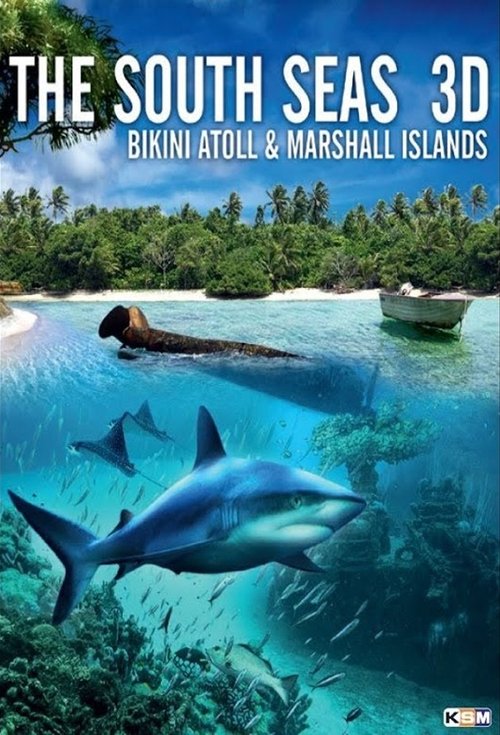
The South Pacific – the ocean between the American continent and Asia, stands for endless vastness, an infinite stretch of water and pristine nature. For many, the South Pacific is synonymous with paradise sun, beaches and of course, the bikini. But the bikini, or rather the island Bikini, also stands for a disastrous series of nuclear tests, carried out by the USA immediately after the Second World War. To this end, numerous ships of different sizes and categories were brought together. The remnants of these vessels have found a watery grave at the bottom of the lagoon: in depths of up to 60 metres, practically inaccessible for the average diver. Until recently, the region could not be visited for decades, due to radioactive contamination. But how have nature and mankind developed? Accompany us to a very special ships cemetery. Explore a region untouched by human hand for more than 60 years and experience the magic of the South Seas.
Subscribe for exclusive insights on movies, TV shows, and games! Get top picks, fascinating facts, in-depth analysis, and more delivered straight to your inbox.