Action
Adventure
Animation
Comedy
Crime
Documentary
Drama
Family
Fantasy
History
Horror
Music
Mystery
Romance
Science Fiction
Thriller
War
Western
Explore all movies appearances
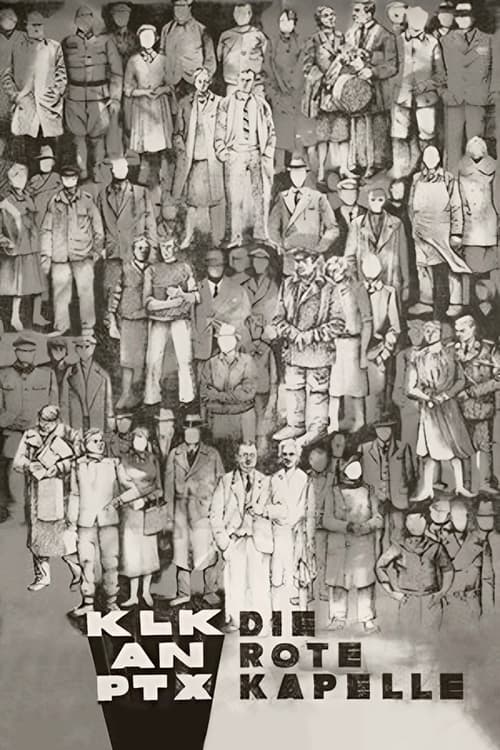
East German film about the history of Red Orchestra, a real life German pro-Soviet spy ring created after the rise of Hitler that turned into a resistance movement led by a leftist Nazi officer, Harro Schulze-Boysen, and Arvid Harnack.

Four-part television film about the theologian Thomas Müntzer, who became a revolutionary and opponent of Luther during the Peasant War in 1525. December 1520: Martin Luther publicly burns the papal certificate threatening him with excommunication. The papal envoy demands the heretic's extradition to Rome. But the Saxon Elector Friedrich lets Luther grant. On the same day, Luther sends his friend and trailer Müntzer to Zwickau to continue the Reformation there. But Zwickau is also the city of oppressed cloth companions and great poverty. Müntzer consciously encounters the social hardship of the people for the first time and transforms from a pendant to the opponent of Luther. In the German Peasant War, he faces the superior princely army in the decisive battle near Frankenhausen as a leader of the insurgents.
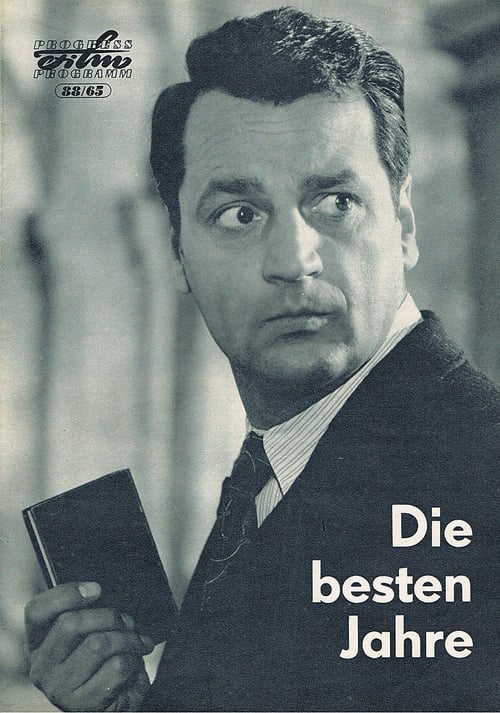
In 1945, Ernst Machner returns home from the war in his mid-20s. Tuche would like him to weave for a living, but his comrades persuade him to become a young teacher instead.
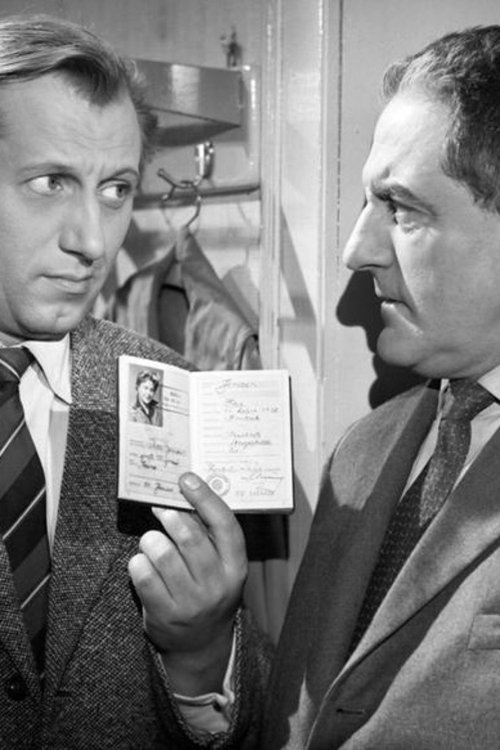
After participating in more than 100,000 euthanasia crimes during the Nazi era, the former SS psychiatrist and physician Dr. Werner Heyde leads an unmolested life in West Germany after the war under a false name ("Fritz Sawade"). With the help of confidants, he manages to get a job as a medical expert. His true identity remains in the dark for many years. His wife has him declared dead and draws the pension of a psychology professor's widow. After remaining unidentified for ten years, Dr. Heyde is unmasked and arrested one day and found dead in his cell shortly before the start of the trial. The film plot is based on the authentic case of Dr. Werner Heyde.
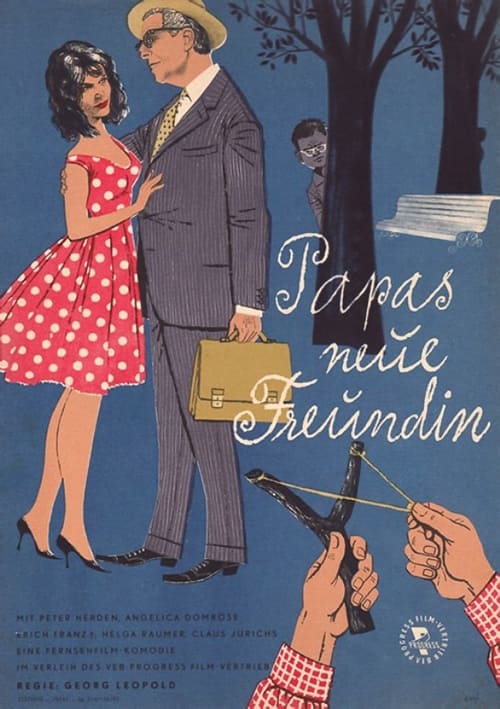
The young medical student Klaus Bach has married the love of his life, Irene, and lives with her and their eternally screaming offspring in a small one-room apartment in his parents' house. So things are tight and everyone's nerves are on edge. What's more, the parents' well-intentioned advice is seriously disrupting the young couple's marital bliss.

In the late summer of 1958, party secretary Ernst Wollni is sent from Berlin to the village of Schwarzwalde to help set up an agricultural cooperative. In the village he meets his childhood friend Fritz Grimmberger again. Their friendship is put to the test as Grimmberger opposes collectivization. Nevertheless, Wollni manages to motivate the villagers and get the LPG going. Grimmberger, however, ruins himself by going it alone. When his daughter Helga also wants to leave him and study in the city, he realizes his mistake. Grimmberger and Wollni reconcile at the village festival.
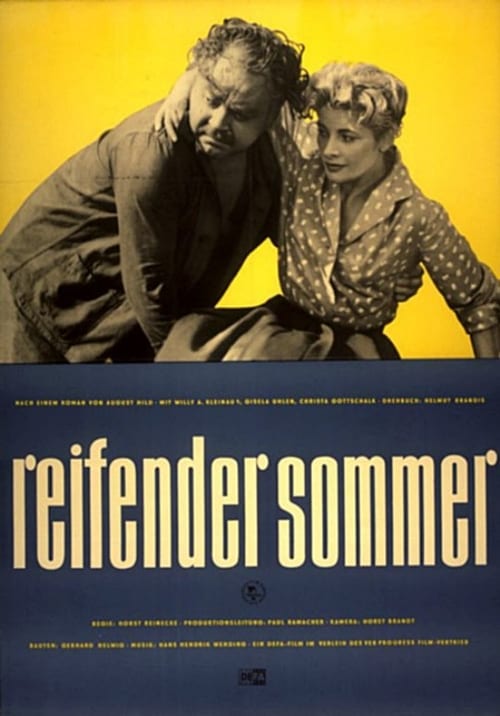
In 1952, former farmhand Erich Kattner arrives in a Mecklenburg village from West Germany to take on a new farming job, which he had originally planned to do together with his wife. She has died shortly beforehand, and so he finds himself alone with the almost unmanageable work. His predecessor has capitulated, the new house and barn are only half-finished, tree stumps still have to be cleared in the fields and much more besides. He is skeptical of outside help. He asks Thekla, the maid of the richest farmer, whom he met on his first day in the village, to start working for him, but she refuses. When she does start working on Erich's farm after an approach from her "master", he only sees her as a work partner.
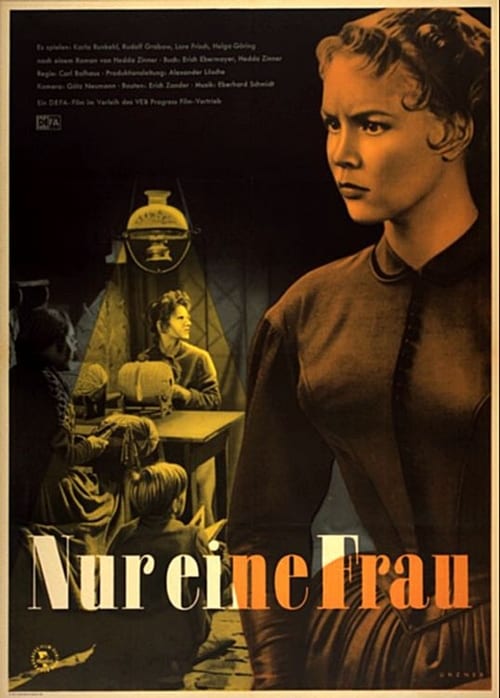
The film tells the life story of Louise Otto Peters, who in the middle of the XIX century in Germany for the first time raised a voice of protest against the unfair treatment of women and their labor. She created the first "women's newspaper" in Germany. The daughter of a famous lawyer, Louise could have easily arranged her life by marrying the wealthy Baron Rodern. But she chose a different purpose in life - to fight for equal rights for women. Through her articles and public speeches, she won the authority and respect of ordinary people.
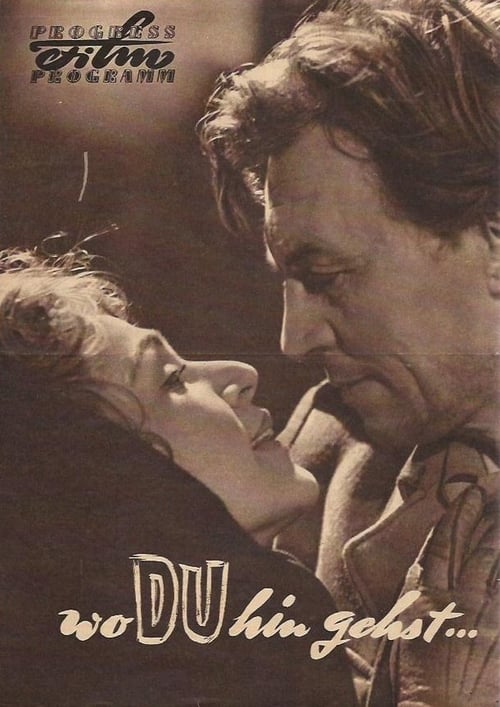
Berlin, 1936. Athletes and visitors from all over the world have come to the city to take part in the Olympic Games. Anti-Fascists use the opportunity to tell the foreign guests about the situation in Germany by distributing leaflets. Being cornered by the Gestapo, the wounded resistance fighter Jakob manages to go into hiding with the help of the Swiss doctor Thea. They fall in love with each other and when Jakob joins the International Brigades in Spain to fight against Franco, Thea follows him and becomes a dedicated fighter against Fascism. The enduring battle, however, keeps preventing them from becoming a real couple.
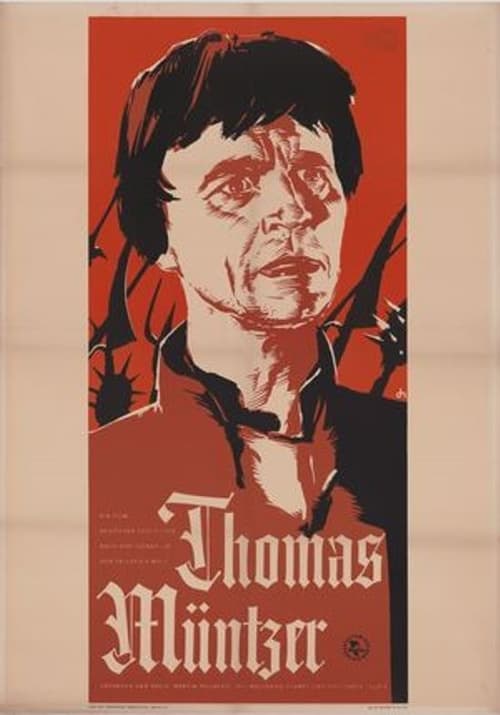
In 1523, young Thomas Müntzer arrives with his wife Ottilie in the Thuringian village Allstedt to assume the rectorate. As a follower of Luther′s teachings, he finds in the Bible not only reasons for clerical, but also for secular reforms. But when Luther turns away from the rural population after a discord with Müntzer, it is Müntzer who becomes the peoples′ spokesman. He is forced to go to Southern Germany, where he convenes with revolting farmers. But his way leads him back to Thuringia. In 1525, he and Heinrich Pfeiffer form the centre of the Thuringian peasant uprising in Mühlhausen, but their success is diminished by the fact that peasants and craftsmen don′t seem to be able to work together. In Frankenhausen, Müntzer becomes the leader of a peasants′ army that is set to fighting the ruler′s army – and sustains a devastating loss. Müntzer is arrested and sentenced to death by decapitation for his insurgency.
Subscribe for exclusive insights on movies, TV shows, and games! Get top picks, fascinating facts, in-depth analysis, and more delivered straight to your inbox.