
Action
Adventure
Animation
Comedy
Crime
Documentary
Drama
Family
Fantasy
History
Horror
Music
Mystery
Romance
Science Fiction
Thriller
War
Western

Nam June Paik was the first video artist who experimented with electronic media and made a profound impact on the art of video and television. He coined the phrase "Information Superhighway" in 1974, and has been called the "father of video art."
Explore all movies appearances
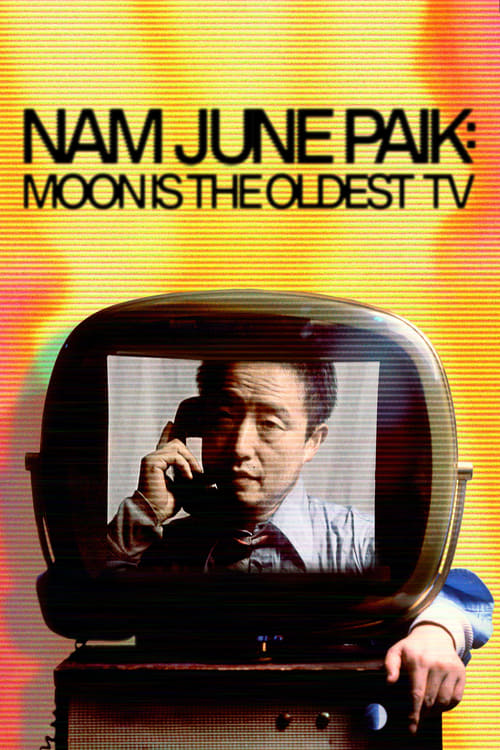
The quixotic journey of Nam June Paik, one of the most famous Asian artists of the 20th century, who revolutionized the use of technology as an artistic canvas and prophesied both the fascist tendencies and intercultural understanding that would arise from the interconnected metaverse of today's world.

The tapes in the program consist of some of Mekas’ earliest cassettes from the 1990s not long after he first began working with video as well as more recent mini-DV tapes from 2010s. The contents of the tapes have not been previously seen in their entirety. The footage provides rare insight into aspects of Mekas’ video-making practice, as well as his activities, thoughts, dreams, and concerns, especially during the later years of his life.

Jim Moir (aka Vic Reeves) explores Video Art, revealing how different generations ‘hacked’ the tools of television to pioneer new ways of creating art that can be beautiful, bewildering and wildly experimental.

In 1961 Lithuanian American artist and impresario George Maciunas established the avant-garde art movement Fluxus. George details the rise of Fluxus following a sensationalized tour of “concerts” in Europe in 1962, and continuing in New York for most of the 1960s and ’70s. During this time Maciunas was converting the dying industrial buildings of Soho into a network of artists’ lofts, creating one of the first official real estate co-ops of artist-owned buildings. Maciunas’s life and legacy—as recounted by artists of his generation, including Yoko Ono and Jonas Mekas—ignited debates that remain pivotal to artists working today.
“Drawing on his personal archives, Mekas has assembled a Fluxus vaudeville starring Yoko Ono, Joseph Beuys, and the late Nam June Paik. Most of the material is relatively recent although Ben Vautieur shows some early 1960s work to hilarious effect and Mekas channels Fluxus founder George Maciunas throughout.” – J. Hoberman, VILLAGE VOICE

DVD accompanying the book "Coyote III", documenting Joseph Beuys and Nam June Paik performing at the Sôgetsu Hall in Tokyo on the 2nd of June 1984. Nam June Paik sits on one side of the stage playing European classical music, improvisations and Japanese folk music. On the other side, Joseph Beuys acts out experiences from living in an enclosed space with a coyote - a free man who turns back into an animal, into a form of life that he understands as a prerequisite for this freedom

This exhibition focuses on Jonas Mekas’ 365 Day Project, a succession of films and videos in calendar form. Every day as of January 1st, 2007 and for an entire year, as indicated in the title, a large public (the artist's friends, as well as unknowns) were invited to view a diary of short films of various lengths (from one to twenty minutes) on the Internet. A movie was posted each day, adding to the previously posted pieces, resulting altogether in nearly thirty-eight hours of moving images.

Friends and colleagues (including Yoko Ono and Merce Cunningham) of Nam June Paik share their thoughts about the groundbreaking multimedia artist in this series of candid interviews filmed by Skip Blumberg at Paik's memorial service. This tribute to Paik also includes "Bonus Art Video," in which 17 New York City artists discuss Paik's work, and the short educational film "Lessons from the Video Artist."
A documentary about the life and work of video artist Nam June Paik made by the Korean Broadcasting Network.

A compilation of over 30 years of private home movie footage shot by Lithuanian-American avant-garde director Jonas Mekas, assembled by Mekas "purely by chance", without concern for chronological order.
Subscribe for exclusive insights on movies, TV shows, and games! Get top picks, fascinating facts, in-depth analysis, and more delivered straight to your inbox.