Action
Adventure
Animation
Comedy
Crime
Documentary
Drama
Family
Fantasy
History
Horror
Music
Mystery
Romance
Science Fiction
Thriller
War
Western
Enjoying the content? Support us!
Explore all movies appearances
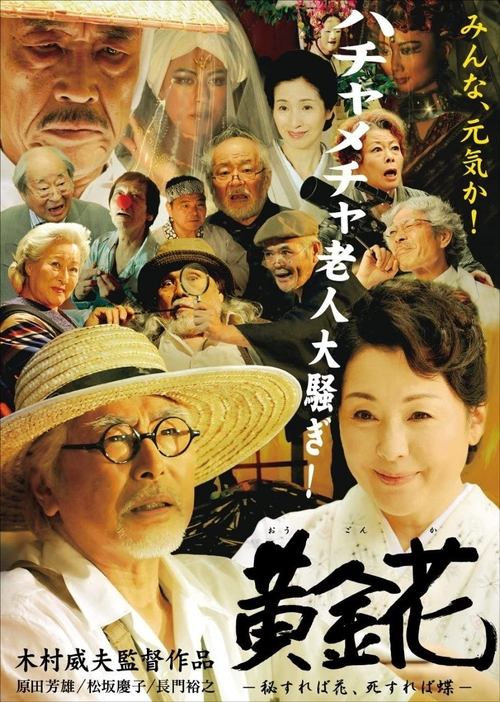
Nursing home "Yuyoso". Many lonely old people live there, including botanist Taro Makiso, a physicist, an actor, a bar mom, and a chef. Maki has spent most of his life studying botany, and has lived without regard for entertainment, drinking, women, or everything else in the world. Then came my 80th birthday. He and a young staff member go digging for wild yam and find a mysterious golden flower. It was the flower of immortality, the "Golden Flower", which was said to bloom beside the Himalayan Virgin, which he had been looking for for many years. From that day onwards, fragments of memories from his youth, which he had intentionally sealed off in order to immerse himself in botany, surged into Maki in a whirlpool.
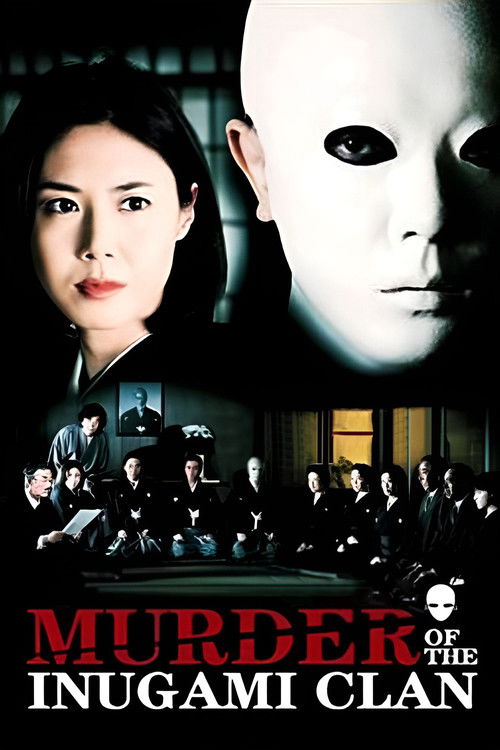
Inugami Sahei, who built up the wealth of the Inugami Clan, passes away, leaving a will with Furudate, his legal adviser, for his daughters Matsuko, Takeko and Umeko, all of whom have different mothers, and for their sons, as well as for Nonomiya Tamayo, the granddaughter of a person to whom Sahei feels heavily indebted. The will states that all his assets are inherited by Tamayo alone, on the condition that she marries one of the sons of the daughters. Furudate's assistant learns the content of the will, and seeks advice from Kindaichi Kosuke, a private detective, as he senses the air of unease. Shortly afterwards, murders start to occur one after another in the clan.
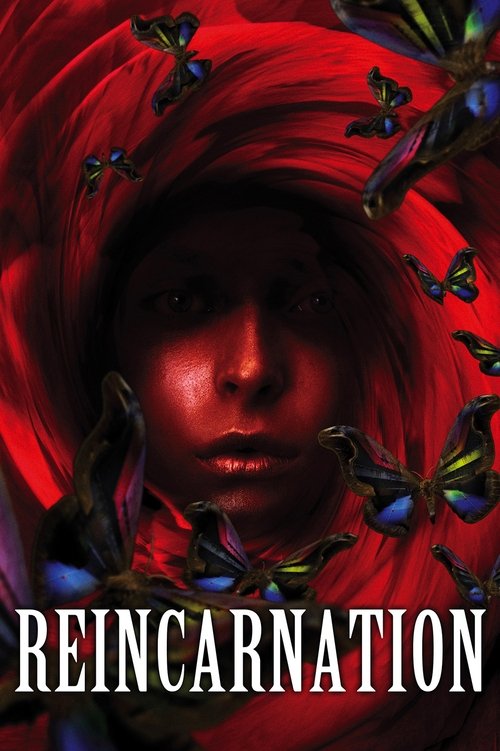
A Japanese actress begins having strange visions and experiences after landing a role in a horror film about a real-life murder spree that took place over forty years ago.
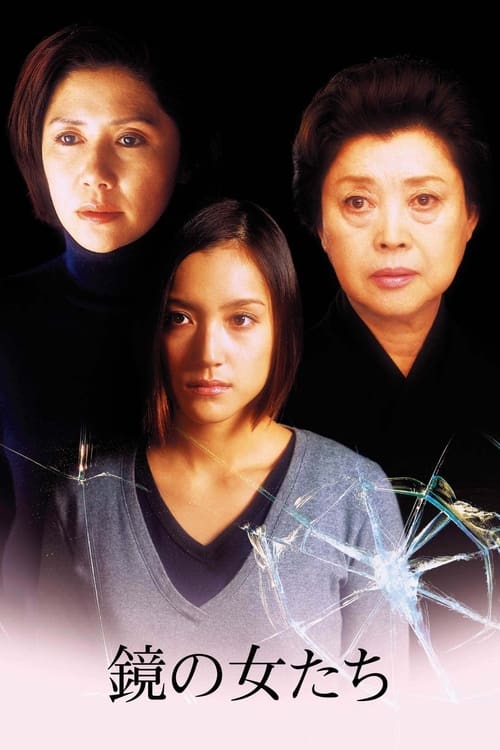
Three women who share memories of the Hiroshima disaster try to uncover the hidden family ties that may or may not bind them together.

A murder mystery told in one-minute clips — one for each day of the year — filmed specifically for the SEGA Dreamcast console. It tells the story of Nao Tsunoda, a 16-year-old schoolgirl who moves to Tokyo’s Grauenheim apartment complex. One day, Nao’s life turns into a nightmare when she suddenly discovers the headless corpse of her neighbor on the roof of the house — and a chain of brutal murders continues, becoming clear that a psychopath is hunting the apartment building's inhabitants.
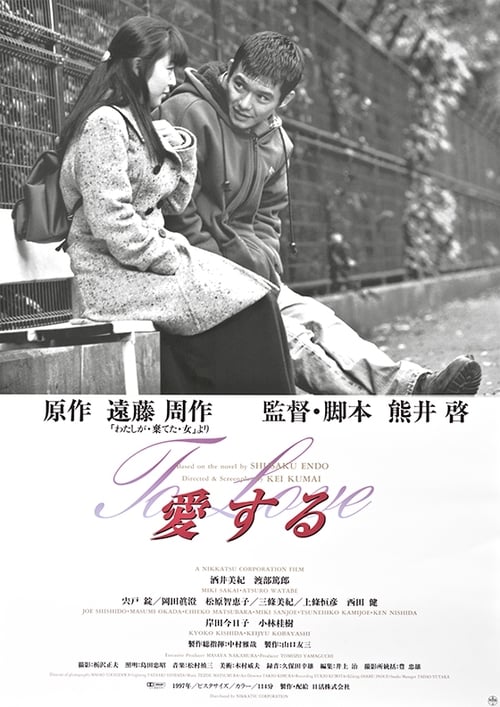
Mitsu works in a factory and has a crush on Tsutomu, a young man she met on the Tokyo streets. One day the two go out, and after some deception, Tsutomu manages to have his way with her. Coming from a broken home, he is frightened by love, so he cruelly allows her to wake up alone. A month passes and a more grown-up Tsutomu returns. The lovers joyously reunite and move in together. All is blissful until both notice a strange sore on Mitsu's arm. The doctors diagnose it as leprosy. Without telling Tsutomu, Mitsu checks into a leper sanitarium. Hanging out with society's pariahs gives her much insight. She discovers the old lepers to be wonderful people. In turn, Mitsu becomes their source of joy and renewed hope. Still, she misses her Tsutomu. One day, the doctors inform her that they erred and that the sore is not leprosy. Happily she heads back to her true love until she realizes with a guilty pang that to return to him would mean unhappiness for her newfound friends
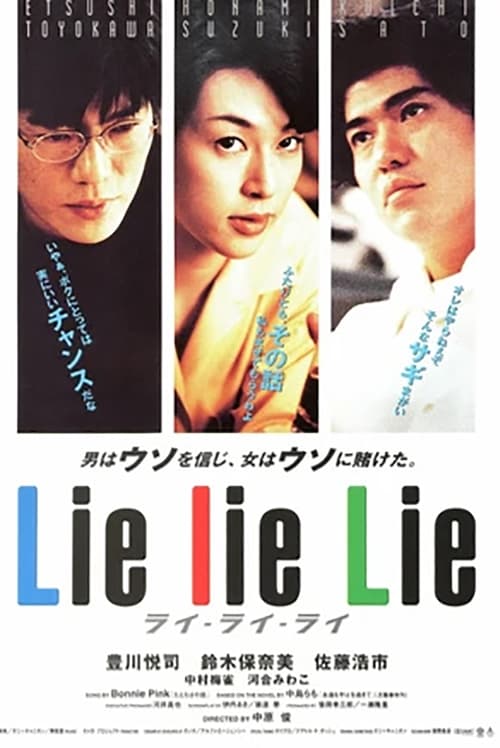
Hatano is living as an insomniac freelance typesetter alone in his bayside apartment. One day, Aikawa, a high school classmate he hasn’t seen in over ten years, shows up on his doorstep bearing a bag of clams. Though he claims to be the director of a fast-growing trading company, Aikawa crashes on Hatano’s couch for days on end. When the sleeping pills he was offered produce a strange side effect, Hatano is slowly dragged into Aikawa’s con-artist lifestyle. Soon afterward, they cross paths with the representative of a big-name publishing company and Aikawa’s ultimate scam begins to unfold.
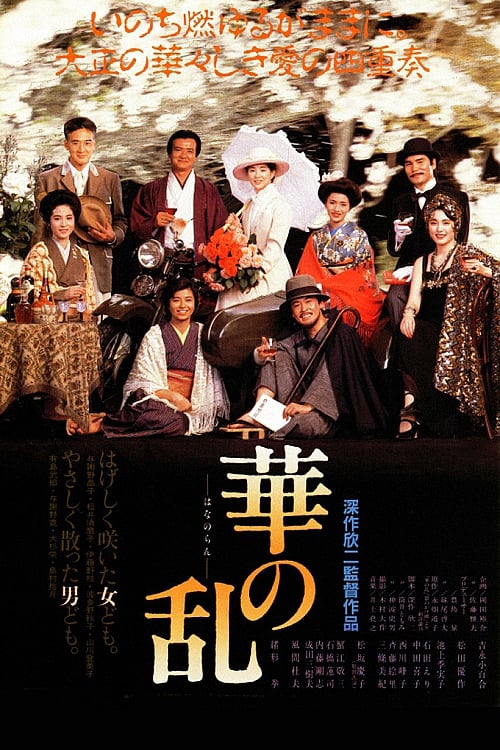
Set in the Taisho era, Hana no ran is a story about fashionable people without impulse control. Much of the action centers on a popular woman writer, the real-life poet Akiko Yosano, and her experiences among the literati of early 20th century Japan. Because of her independent, anti-war and often erotic poetry, she was a lightning rod for revolutionaries and other extremists, many of whom were destined to glamorous, yet ultimately pointless, deaths.
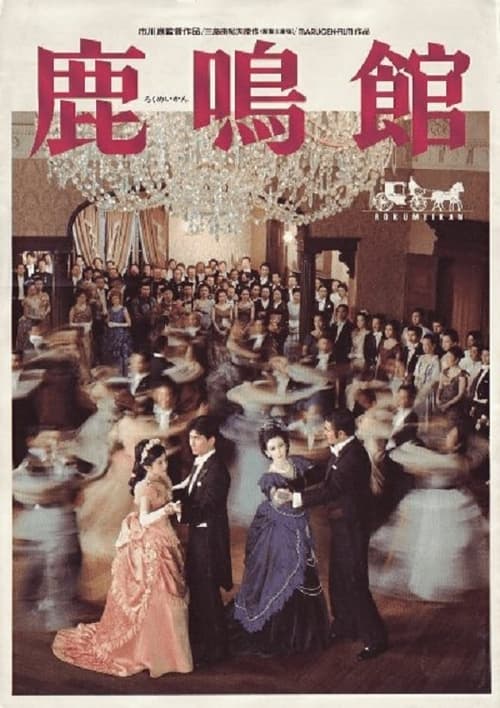
No plot available for this movie.
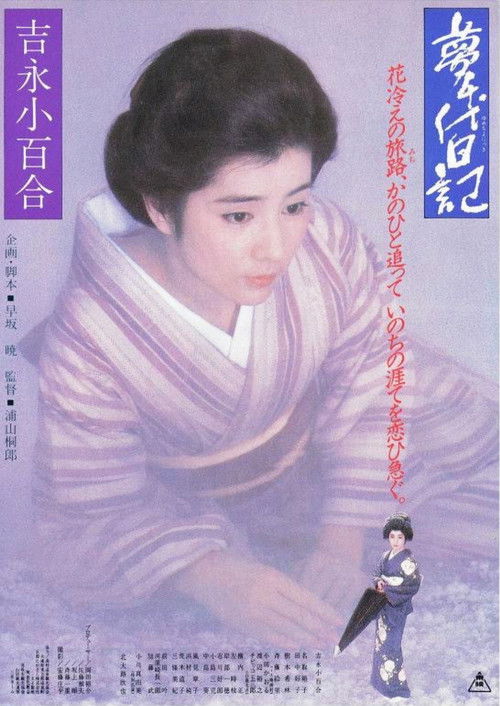
Yumechiyo, a geisha house madam recently diagnosed with a terminal illness, yearns to do something constructive with the little time she has left. Though her responsibility lies in taking care of her girls, she finds purpose in helping a man wrongfully accused of murder and in the process discovers love.
Subscribe for exclusive insights on movies, TV shows, and games! Get top picks, fascinating facts, in-depth analysis, and more delivered straight to your inbox.