
Action
Adventure
Animation
Comedy
Crime
Documentary
Drama
Family
Fantasy
History
Horror
Music
Mystery
Romance
Science Fiction
Thriller
War
Western
Explore all movies appearances

No plot available for this movie.
No plot available for this movie.
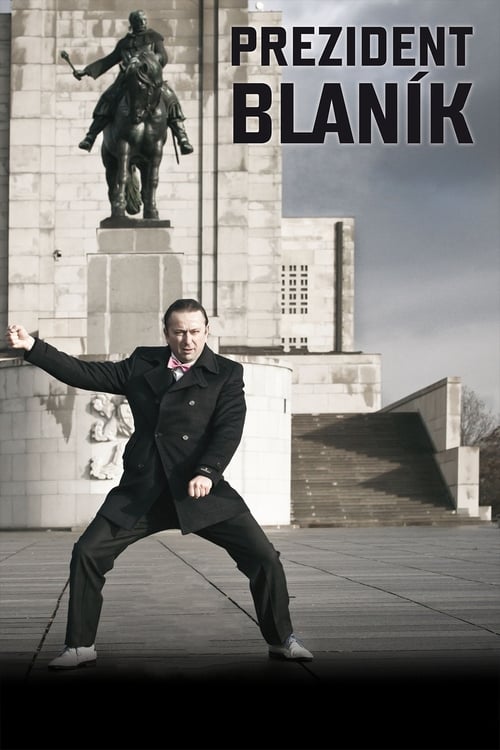
Tonda Blaník announced his presidential candidacy, promising, for example, butter and lithium for every family or corruption accessible to all, and even collected 100,000 signatures. However, he ultimately did not submit his candidacy for the presidency when his assistant Žížala failed to deliver the signature sheets to the Ministry of the Interior on time. Nevertheless, Tonda Blaník continues in his efforts to save the Czech Republic and show its inhabitants how to live better. The feature film follows on from the successful series Kancelář Blaník.
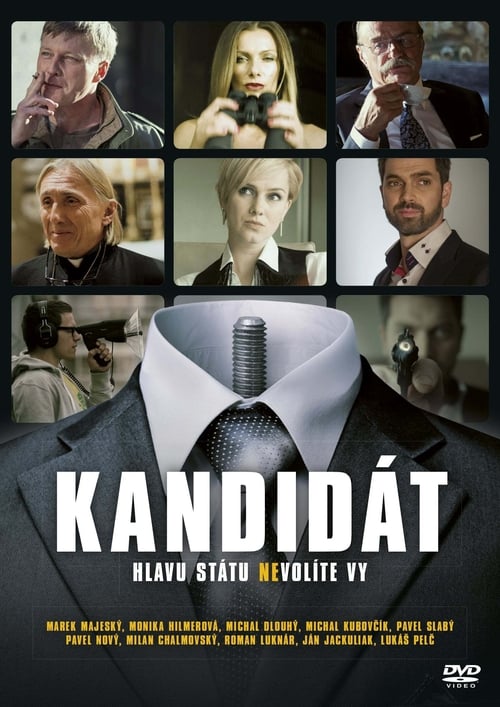
The story of the film The Candidate takes place during two months of campaigning before a non-specific presidential election in one specific country. The author of the diary entries has no idea for whom he is recording the eavesdropping and enthusiasm for an interesting job in which he follows a bishop, a crazy owner of an advertising agency and a bland presidential candidate with the eloquent name Peter Potôň and an even sweeter-sounding family history, soon give way to disgust and confusion. His diary becomes a file with transcripts of conversations, information about characters and characters, emails, scraps from psychiatric medical records and pictures, which he scribbles at first out of boredom, later because words and rational explanations are no longer enough. The candidate is a political farce, a sad-funny depiction of what happened, is happening, and could very easily happen in this small country.
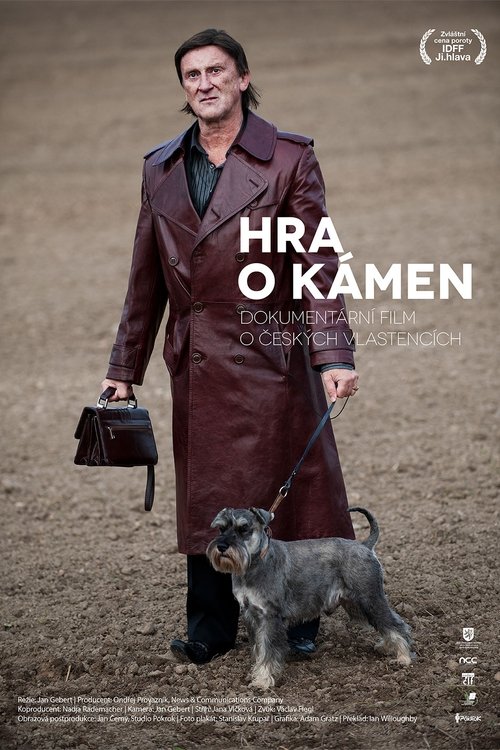
Do the Sudeten Germans who were tortured and killed during their expulsion at the end of the war deserve a monument or not? This Czech documentary shows that this is more than an intellectual question but a political struggle. In response to a stone monument to the victims of the expulsion in Nový Bor, a group of local inhabitants has unleashed a hate-filled ritual dance of national fervor and moral outrage that turns out to be a sufficiently strong election issue as well.
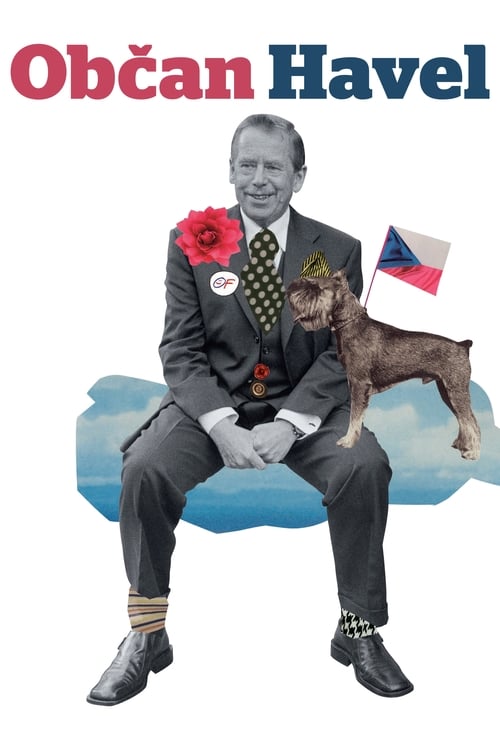
The documentary explores the presidency of Václav Havel, a poet who unexpectedly became president. The film, starting in 1992, captures Havel’s experiences after the breakup of Czechoslovakia, a significant defeat for him as he had campaigned for its continuation. Despite political opposition and accusations of responsibility for the breakup, Havel runs for president of the new Czech Republic. The film, a unique document, was Koutecký’s most important project, continued by Janek after Koutecký’s death in 2006.
A labyrinthine portrait of Czech culture on the brink of a new millennium. Egon Bondy prophesies a capitalist inferno, Jim Čert admits to collaborating with the secret police, Jaroslav Foglar can’t find a bottle-opener, and Ivan Diviš makes observations about his own funeral. This is the Czech Republic in the late 90s, as detailed in Karel Vachek’s documentary.
Quite a few years have passed since November 1989. Czechoslovakia has been divided up and, in the Czech Republic, Václav Klaus’s right-wing government is in power. Karel Vachek follows on from his film New Hyperion, thus continuing his series of comprehensive film documentaries in which he maps out Czech society and its real and imagined elites in his own unique way.
From the behavior, discourse, and appearance of individual actors, Vachek composes, in the form of a mosaic, a broad and many-layered film-argument about Czechoslovak democracy in the period of its rebirth, all administered with the director’s inimitable point of view.
Subscribe for exclusive insights on movies, TV shows, and games! Get top picks, fascinating facts, in-depth analysis, and more delivered straight to your inbox.